

Carthusia






Carthusia
There are places that cannot be photographed. Not really. The Blue Grotto, the light over the Faraglioni in the early morning, the scent of jasmine and wild carnation that wafts through the narrow alleyways of the Piazzetta - all of these things defy reproduction. Capri is such a place. And Carthusia is the only serious attempt to capture it nonetheless: in glass, in alcohol, in scent.
Carthusia: the world's smallest perfume laboratory, Capri's greatest story
The Carthusia perfume factory - its full name is Carthusia - I Profumi di Capri - is located just a few steps away from the Gardens of Augustus, on that narrow spit of land from which you can see both the Tyrrhenian and Ligurian seas. The laboratory itself is modest: small alambics, island-sized bottling machines, shelves full of cool glass bottles. When you enter, you immediately understand why Carthusia calls itself the smallest perfume laboratory in the world - and why this is not a shortcoming, but its real strength.
Until 2002, Carthusia's fragrances were only available on the island. If you wanted to buy them, you had to come to Capri. This was not a marketing strategy, but simply the consequence of a philosophy that treats quantity as secondary to demand. Only when the quality and authenticity of the production methods were fully assured did the brand open up to the world - quietly, without a campaign, passed on from connoisseur to connoisseur. Today, Carthusia fragrances are available in selected boutiques from Tokyo to New York. It has taken almost seven decades to get there.
The legend of 1380 - and the story behind it
Every great perfume brand has its founding myth. That of Carthusia is one of the most beautiful in the industry - and the more you know about Capri, the more unlikely it sounds. In 1380, the prior of the Certosa di San Giacomo, the oldest monastery on the island, is said to have been surprised by the imminent arrival of Queen Giovanna of Anjou. Without wasting any time, he had the most beautiful flowers on the island collected - carnations, jasmine, wild herbs - and placed in water as a welcome gift for the sovereign. Three days later, when the flowers were to be disposed of, the Prior noticed that the water had taken on a scent that was completely unfamiliar to him: strange and at the same time deeply familiar, as if it had always been part of the island. An alchemist monk identified the source as Garofilum silvestre caprese - the wild carnation of Capri.
The water became the island's first perfume. Whether the legend actually happened is an open question. The fact that it is told is no coincidence: it describes precisely what Carthusia is all about. It is not about the targeted design of fragrances on the drawing board, but about listening to what the island itself has to offer in terms of aromas, what is in its soil, its air and its plants.
The second act is historically documented: in 1948, the then prior of the Certosa di San Giacomo discovered old fragrance formulas in the monastery archives. With papal permission, he shared them with a chemist from Piedmont, who then founded the small laboratory near the Gardens of Augustus and gave it the name Carthusia - the Latin word for Certosa, for Charterhouse. The company logo, a blooming mermaid in metamorphic motion, was designed in the same year by Neapolitan artist and Paris returnee Mario Laboccetta - an image that has remained unchanged ever since.
Silvio Ruocco and the family that Capri carries within it
Silvio Ruocco is a child of the island. Growing up in post-war Capri, he spent hours as a teenager in the gardens of Augustus - the place where the world seems wider than anywhere else on the island. And which is in the immediate vicinity of the small perfume factory, which was still run by a Doctor Iovine at the time. Ruocco followed Iovine's work with a fascination that he himself describes as an obsession: the alambics, the formulas, the relationship between nature and chemistry. When the opportunity to take over Carthusia arose at the end of the 1990s, he did not miss it. In 1998, he became the owner - and, together with his daughter Virginia, began to transform the manufactory from a local insider tip into a globally respected niche brand.
Virginia Ruocco, a trained orientalist with experience in London and Tokyo, took over marketing and product development at an early stage. Under her direction, the flacons were redesigned - the rectangular shape remained, the brand crest was engraved into the glass itself and the atomization pump was refined. Ten of the current fragrances come directly from the monastic tradition and have been carefully reworked by her; the rest are new creations that speak the same olfactory language. The result: a line that seems to be cast from a single mold, because it is.
In 2023, on the occasion of its 75th anniversary, the Italian Ministry of Economy officially recognized Carthusia as a company of national historical interest - a distinction that Italy reserves for those companies that actively preserve traditional values and the heritage of Made in Italy. In the same year, the Ruocco family opened a new boutique under the clock tower in the iconic Piazza Umberto I, the heart of Capri: a place of return, of coming together, of self-affirmation.
Carthusia perfume - craftsmanship you can smell
All stages of production at Carthusia are carried out by hand. This is not a romantic phrase, but describes the actual process: from mixing the essences to bottling and packaging. The ingredients - flowers, herbs, citrus fruits - are mainly sourced from Capri and the surrounding region. Capri is astonishingly rich botanically; the island is home to almost 500 different plant species, and the saltiness of the sea air gives even familiar aromas their own distinctive note.
The fragrances are produced in small batches, which on the one hand ensures the consistent quality of each individual bottle and on the other prevents the manufactory from falling into mass production. When you buy Carthusia, you are buying something that is not produced in millions. This is not a sales promise - it is a production condition.
Michael Jondral, owner of one of the most important sartorial stores in the German-speaking world, once discovered Carthusia 's fragrances himself on Capri. His description - "beautiful, noble and elegant" - is more precise than it sounds. Because what Jondral appreciates about Carthusia is the same quality that attracts him to the Sassoris and Kitons of this world: the absence of compromise. Fragrances that don't want to be loud, that don't force attention, but deserve it.
Capri Forget Me Not - Floral, deep, unforgettable
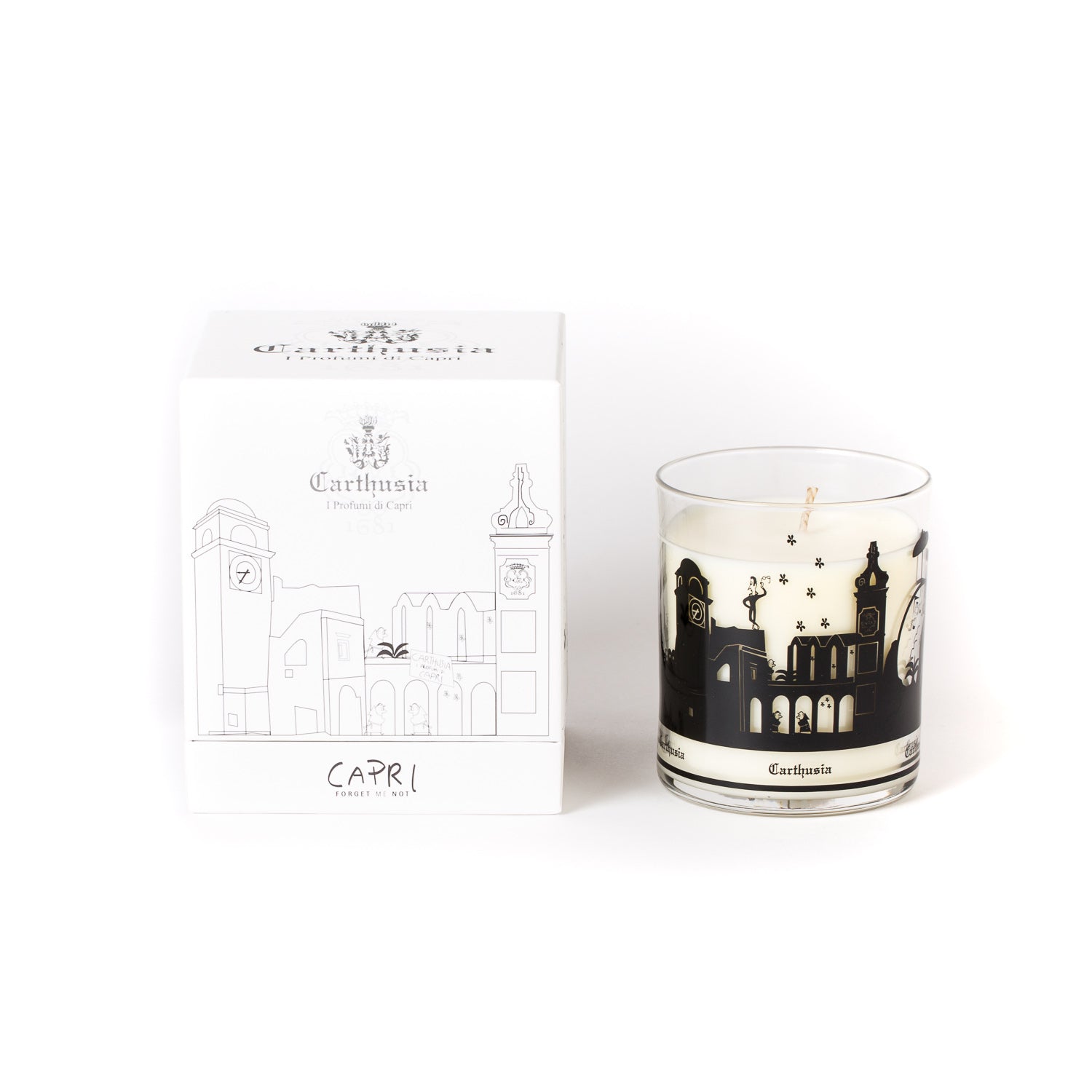
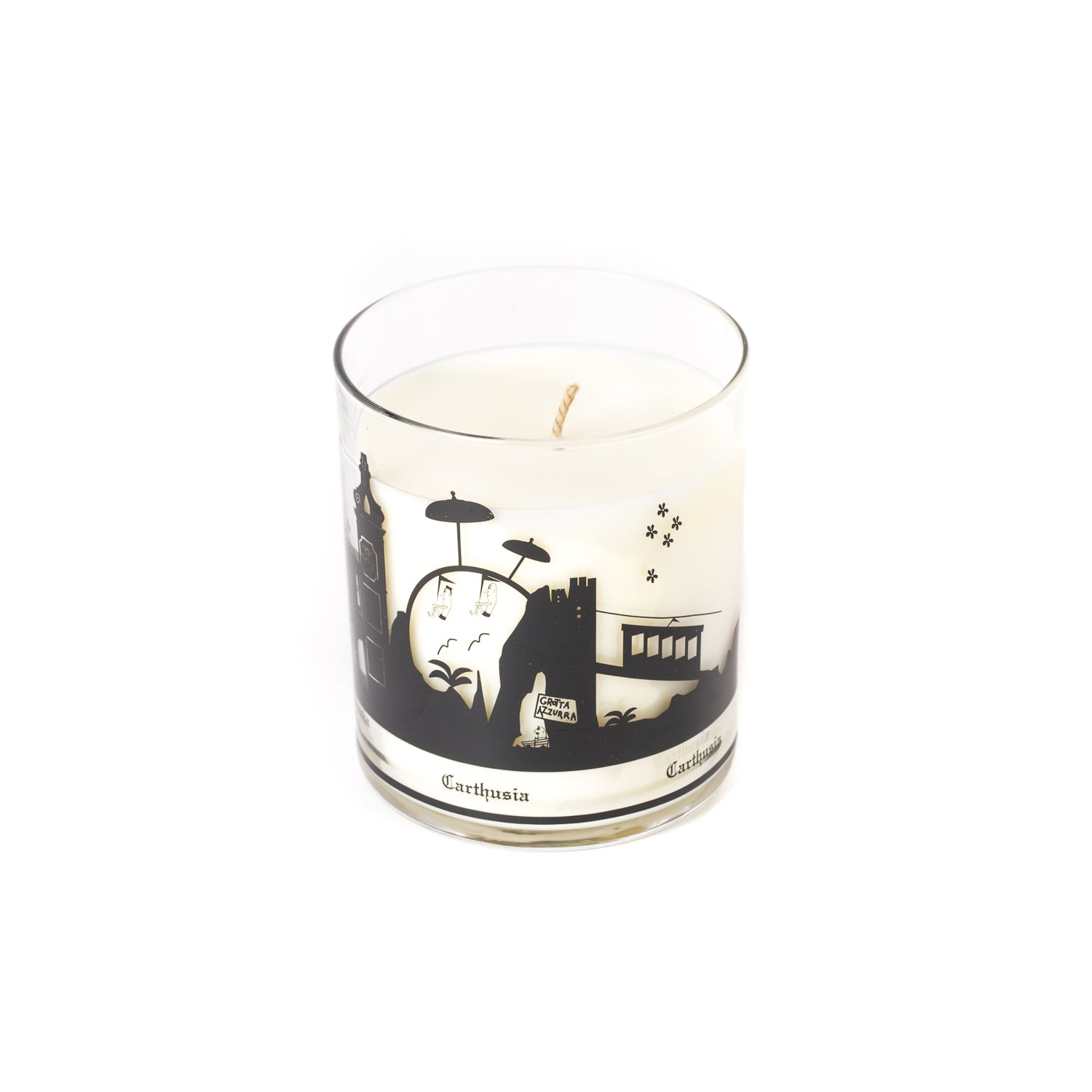
Capri Forget Me Not is one of the most complex fragrances in the Carthusia portfolio. Its floral heart - forget-me-not, complemented by bright, slightly aquatic accents - unfolds slowly and with astonishing depth on the skin. The fragrance evokes the Capri of the early morning: the gardens still dewy, the sun still cool, the sea still calm. It is not nostalgic in the sentimental sense, but in the olfactory sense: it is reminiscent of something that you may never have experienced, and yet immediately recognize.
For the gentleman who seeks fragrances that correspond with the fabric of his clothes - who carries the same attention to detail seen on the collar of a hand-sewn shirt - Capri Forget Me Not is a reference. It wears discreetly and lasts a long time.
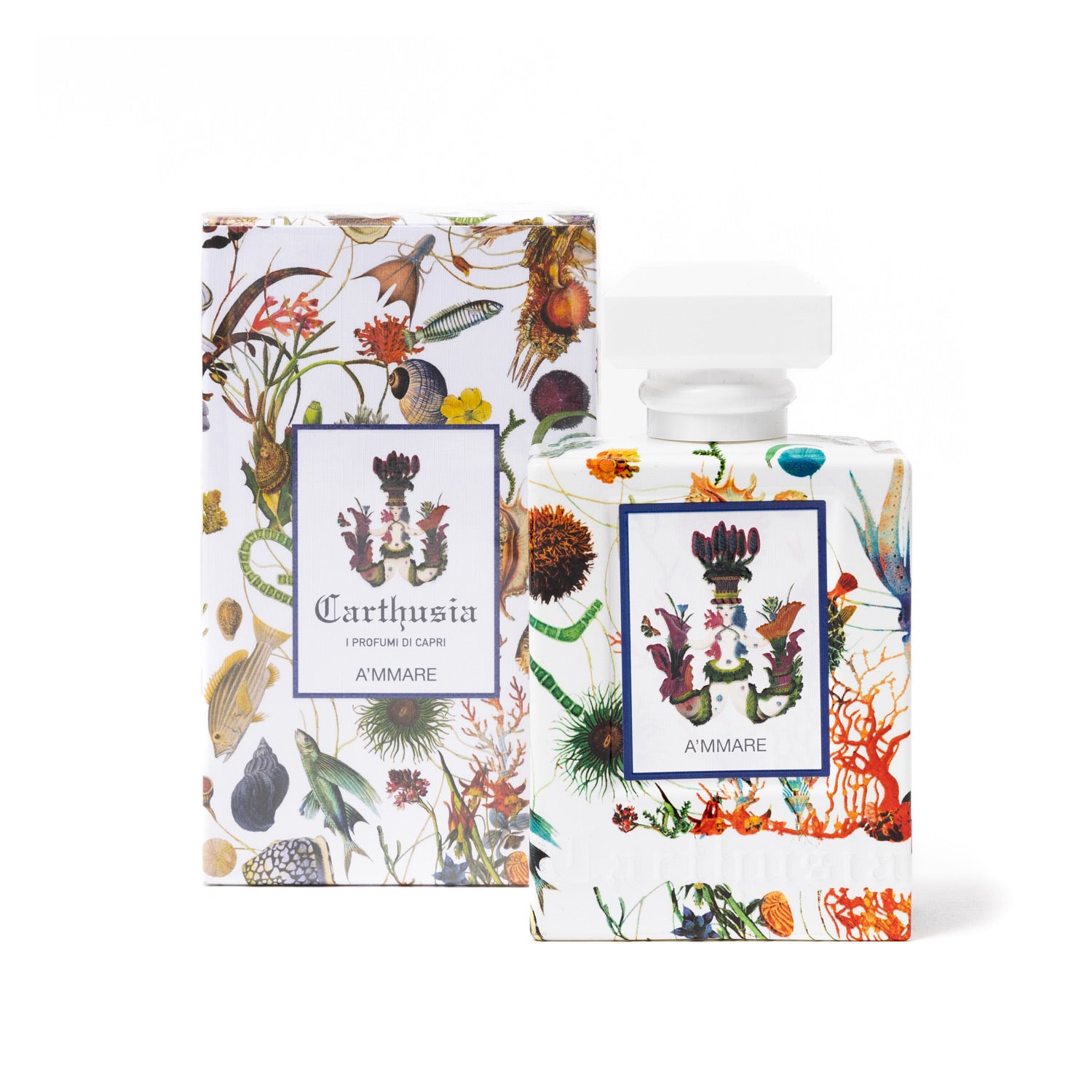
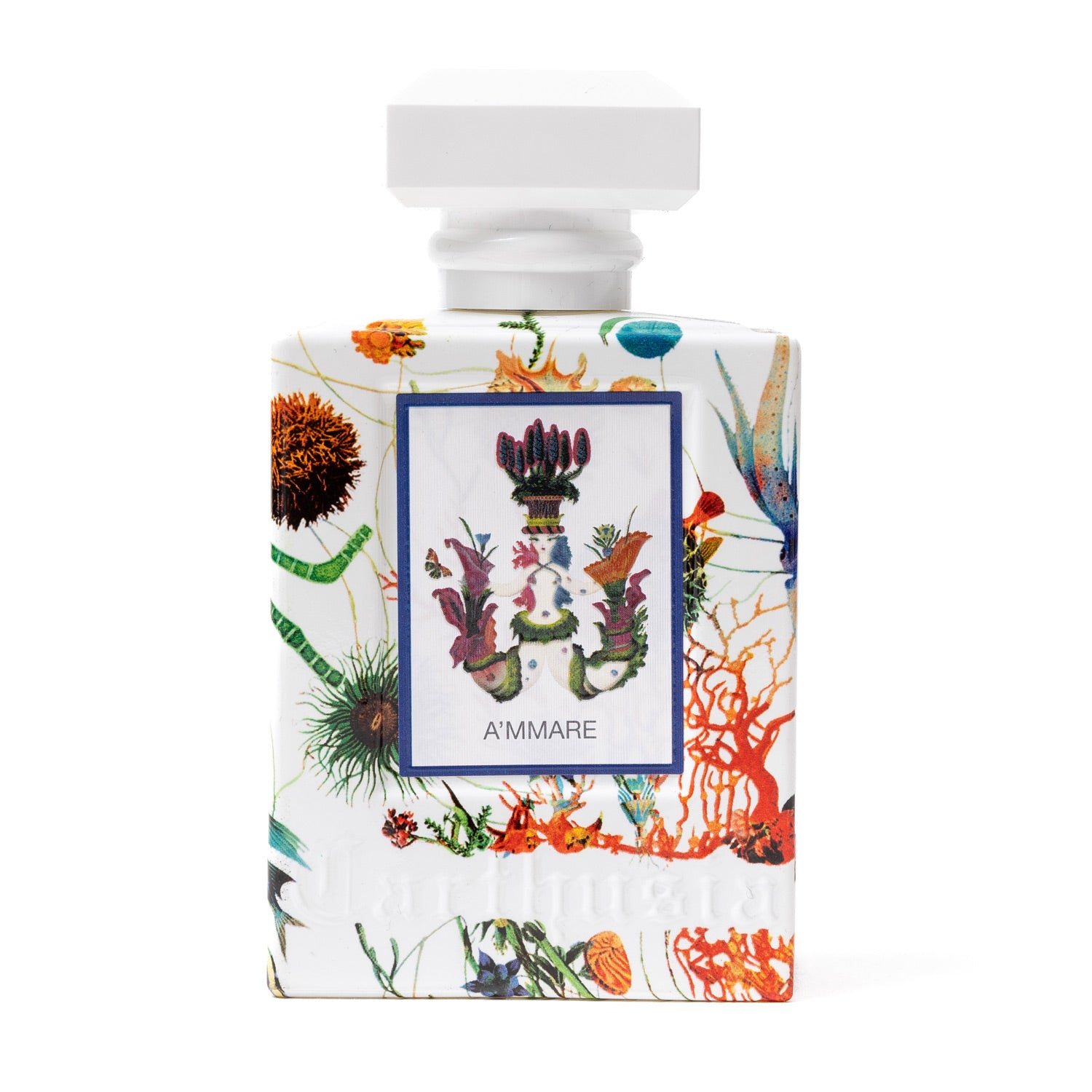
Carthusia A'mmare - salt air, freedom, depth
The name A'mmare is no ordinary Italian: it is Neapolitan dialect and means " out to sea", or more precisely: the attitude with which one enters the sea. It is not a tourist term, but one used by an islander. That says a lot about the fragrance.
Carthusia A'mmare is one of the manufactory's best-selling fragrances - and for understandable reasons. It is a rare example of a marine fragrance that is neither soapy nor synthetic. The salinity is present but never dominant; beneath it lie green herbal notes and a woody foundation that gives the whole thing stability. A'mmare smells like a morning by the sea, where the wind already has a direction - of movement, of departure, of something to come.
Carthusia Mediterraneo - lemon, tea, Mediterranean tranquillity
Capri's lemon groves are legendary. Anyone who has ever stood among them while the sun shines through the foliage and the fruit hangs heavy on the branches will understand why Carthusia Mediterraneo sounds like its name. Lively citrus notes - not the synthetic freshness of detergents, but the genuine, slightly bitter citrus depth of sfusato amalfitano - meet green tea: dry, tannic, refreshing without any sweet distraction.
Mediterraneo is the daytime fragrance par excellence. It goes well with a linen jacket in summer, a cotton shirt in spring, a cashmere sweater on an unexpectedly warm winter's day. It doesn't make a statement - it creates a mood.
Carthusia Uomo - Masculine, complex, full of character
When Michael Jondral talks about fragrances that suit the sartorial world, Carthusia U omo is the olfactory counterpart to the tailored suit from Naples. Spicy, woody, with a floral dimension that brightens the heart of the fragrance without feminizing it - Uomo is a fragrance for the man who knows what he wants and owes no explanation.
The composition is not loud. It does not rely on the big first impression, but on consistency: Uomo develops on the skin, intensifies after an hour and remains recognizable throughout the day. Capri has always attracted characters who did not have to explain themselves - Tiberius, Rilke, Axel Munthe, Malaparte. Carthusia Uomo is the fragrance for this kind of personality.
Via Camerelle - elegance without effort
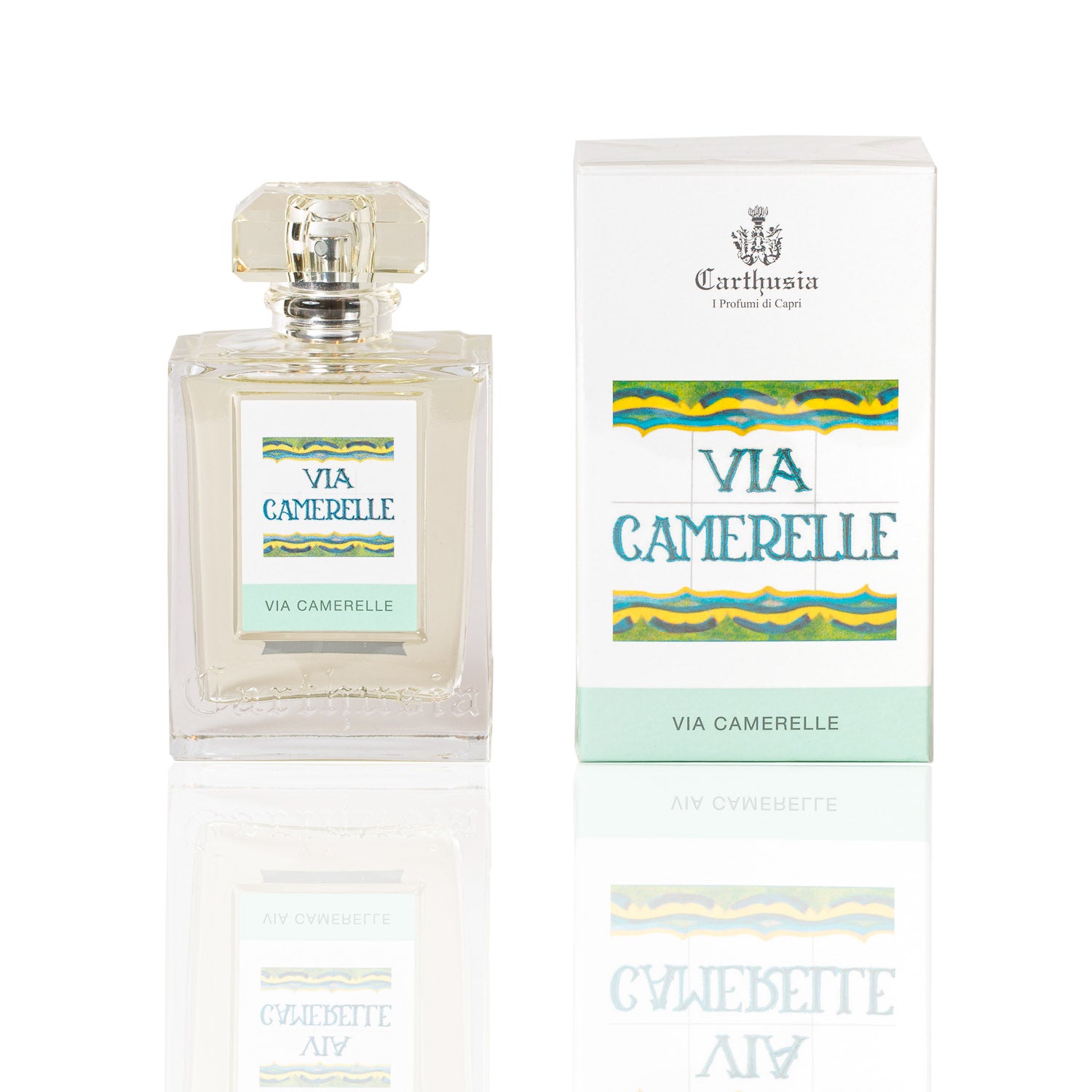
Via Camerelle is Capri's most famous street. The boutiques of the big names are lined up here, the cobblestones are white and smooth, the walls are whitewashed. No cars, no hurry - just the clacking of heels and the murmur of conversations in four languages at once. The fragrance that Carthusia has named after her translates this atmosphere with remarkable accuracy.
Via Camerelle begins citrus-fresh - bergamot and bitter orange, clear and bright - then opens to white flowers with a hint of sea moss and closes with a cedarwood base that remains warm without becoming heavy. It is a fragrance that does not confuse lightness with superficiality. A fragrance for people who don't have to make an effort to look elegant - because elegance is not an effort for them, but an attitude.
Why Carthusia at Michael Jondral - and nowhere else
The decision to include Carthusia in the Michael Jondral range followed the same logic that has guided the house since its foundation: Quality over quantity, character over trend, authenticity over availability. Anyone who buys a suit or a shirt from Michael Jondral is not looking for the loudest thing in the shop window - they are looking for the right thing. And the same applies to the fragrances available there.
Carthusia fits into this picture not only thematically - Italian craftsmanship, natural ingredients, a history that stretches back centuries - but also philosophically. Both the manufactory from Capri and the sartorial house share the conviction that what really counts takes time. That shortcuts in craftsmanship are not shortcuts, but mistakes. That a person who chooses an item of clothing or a fragrance with real care is not consuming - but collecting.
"A fragrance and a manufacture that fits perfectly into the sartorial world of handmade suits and shirts - beautiful, noble and elegant in equal measure." - Michael Jondral
This assessment is not an advertisement. It is a summary of an experience that began in Capri and has not stopped since.
Frequently asked questions about Carthusia
How long has Carthusia been around?
The Carthusia perfume factory was officially founded in 1948 when the then prior of the Certosa di San Giacomo discovered old fragrance formulas and - with papal approval - handed them over to a chemist from Piedmont. The latter founded the smallest perfume laboratory in the world and gave it the name Carthusia, the Latin equivalent of Certosa. However, the legendary roots of the company date back to 1380.
Who is the current owner of Carthusia?
Since 1998, Carthusia has been owned by Silvio Ruocco, a native of Caprese, who, together with his daughter Virginia, has developed the manufactory into an internationally recognized niche perfume brand. Virginia Ruocco is in charge of marketing and product development; the other siblings are also involved in the family business.
Where are Carthusia perfumes made?
All Carthusia products are made by hand in the company's own laboratory on Capri, just a few steps away from the Gardens of Augustus. The raw materials - flowers, herbs, citrus fruits - come mainly from the island and the surrounding region. All stages of production are carried out manually, in small batches and according to traditional methods.
What makes Carthusia different from other perfume brands?
Three characteristics make Carthusia unique: firstly, its direct roots in a specific place - Capri is not a backdrop, but a source of raw materials and a carrier of meaning; secondly, the consistent manual work without industrial compromises; thirdly, the history, which is not constructed, but has grown - from the Carthusian monks of the 14th century to the Prior of 1948 to the Ruocco family today. This results in a continuity that can be felt in every fragrance.
Are Carthusia fragrances for men or women?
Most Carthusia fragrances are unisex or lean in different directions depending on the wearer. Carthusia Uomo is designed to be decidedly masculine; Gelsomini di Capri tends to be feminine. Fragrances such as A'mmare, Mediterraneo, Via Camerelle and Capri Forget Me Not develop their full effect on every wearer - they react to skin, not gender.
Where can I buy Carthusia in Germany?
Carthusia perfumes are available from Michael Jondral - both online and in-store. The carefully curated selection includes the house's most important fragrances and is advised by a team that wears the products with conviction.